Since it first appeared in 1998, Google Search has become so embedded into everyday life that it's become a verb ("Google it").
I haven't used it for at least a month and won't be in the future.
That's because AI is now markedly better for everyday queries and boy is it fast: it's rare to wait even a minute for a detailed answer like that above.
In the past I would've been visiting website after website looking for the particular song — David Bowie's "Modern Love" — that Perplexity Pro spit out in about 30 seconds.
In Brussels' iconic Grand-Place, a summer tradition literally blossoms in monumental style. The city's Flower Carpet event, which this year celebrated its 24th edition, celebrates art, community, and diplomacy in the heart of Belgium's capital, which is also the hub of the European Union. From August 13 to 16, the event marked 160 years of friendship between the nation and Japan, inviting artist Hiro Sugiyama to design a city square-sized composition, which he conceived as a tribute to ukiyo-e artist Katsushika Hokusai.
Titled "Neo Hokusai," the monumental arrangement comprised more than 750,000 fresh dahlias, covering nearly 14,000 square feet. Framed with ornate patterns, the reimagining of the famous woodblock print "The Great Wave Off Kanagawa," from Hokusai's series Thirty-Six Views of Mount Fuji (1830-1832), glows in bright magenta, vermilion, and yellow. Flowers covered about 80 percent of the entire design.
Dahlias aren't the only species artists have chosen for the carpet in the past, although the 2024 edition also incorporated the voluminous blossoms. In 2018, a design highlighting the central Mexican region of Guanajuato grew out of one million begonias and was captured in an aerial timelapse by Joerg Daiber.
This year, the dahlias were sourced in partnership with Bloemencorso Loenhout, a giant flower parade that has been running for three quarters of a century in the northern city of Loenhout. This year, that event kicks off on September 12.
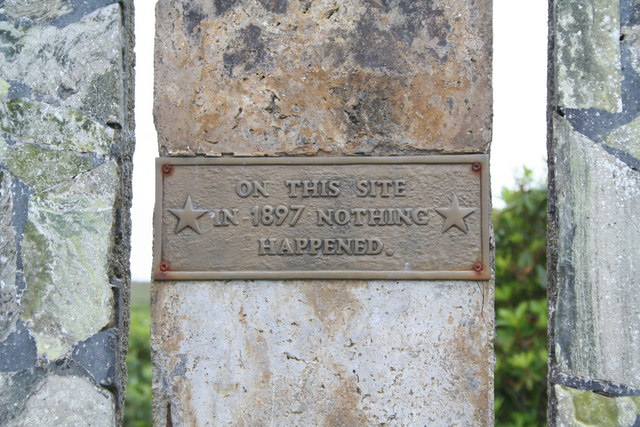
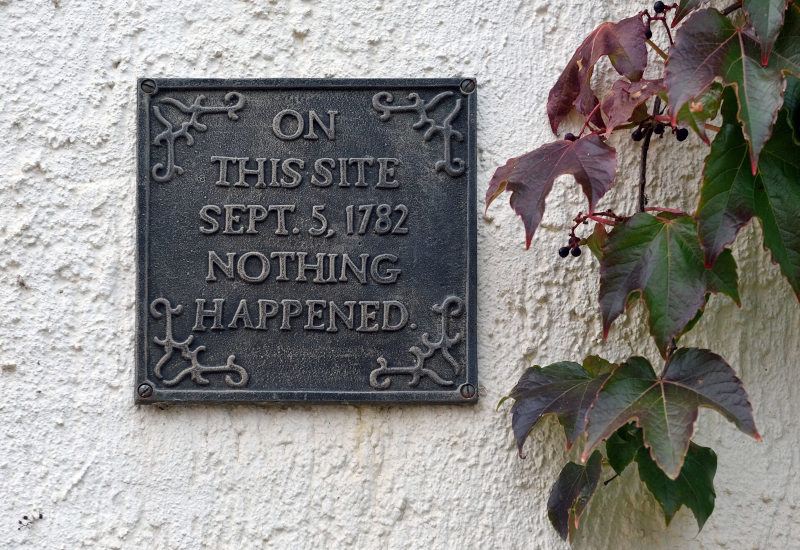
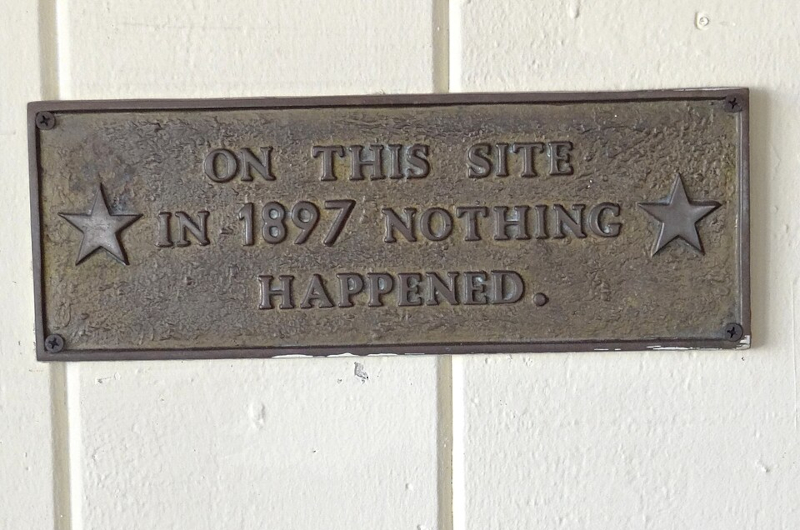
I happened on the declaration in the headline while browsing around in bookofjoe's statistics pages.
I must be crazy 'cause it made me really happy!
I have no idea what a blog follower is or how you become one but clearly I'm not alone — I mean, there are over 8 billion people not in the least interested.
FunFacts: After I moved boj here from Typepad on October 1, 2025, I averaged 300-500 pageviews/day for a few months. Since then the numbers have steadily increased, such that for the past two weeks I've been getting around 2,000/day. I find that a pleasant surprise, since boj on Typepad for the years before it went defunct on Sepember 30 of last year was averaging 500 pageviews/day.
Once upon a time in blog supremacy days (2010-2012) 15,000 pageviews/day was the average, with occasional peaks up to 100,000 when a major website would pick up something I'd posted.
The legendary French director said in an interview that the difference in how people perceived movies and television resulted from the placement of the screen.
Godard noted that we generally look down at the TV screen (remember, this was back in the day, when screens were much smaller) and up at a movie screen.
He believed the supplication-like nature of looking up created a sense of worship, making us more likely to imbue what we see with greater meaning and force.
Gazing down at the TV screen did the opposite, making us spectators rather than participants.
With the advent of large flat screens, it's now possible to come closer to the cinema experience by placing the screen up rather than at eye level or lower.
This 2007 23-minute-long film features Brit Marling in her first role.
I stumbled on it last week while compiling a list of movies I really liked, a number of which feature her, including "Another Earth" (2011), "Sound of My Voice" (2012), and "I Origins" (2014).
Like her subsequent full-length films cited above, "The Recordist" tilts the world such that an unlikely but possible premise gets introduced into the mix of events and drives them.
Watch it free, the way we like it.
N.B. I'm not sleeping on her fantastic "The OA" — two seasons on Netflix, in 2016 and 2019, popular and acclamied, then abruptly cancelled as Netflix decided to move on to something new.
These occupy a liminal space in my array of writing implements and accessories: I only learned of their existence a month or so ago and immediately took a flutter.
Turns out these 4" x 6" notepads are very useful for any number of things and their killer app is that they have a double life as real Post-its.
I stick them all over the place, wherever/whenever I want to remind myself of something that I'd rather not add to a lengthy to-do list.
As David Bowie said in the lead-in to "Modern Love": "Get things done."
In the video above you will note how the "expert" unrolls the elastic bandage.
Look closely.
Now watch below as a real expert demonstrates the correct way to unroll and apply the bandage.
Long story short (which I learned on the first day of my orthopedic surgery rotation in my third year of med school): unroll the material away from your body as is demonstrated in the lower video.
Lagniappe: the correct technique is faster and yields a more professional appearance.
In recent years my daily pageviews averaged 300-500/day, down from the halcyon days of 2010-2012 when 15,000 daily views was the norm.
When Typepad shut down on September 30, 2025, and I shifted boj over to Blogger starting the next day, there was an initial spike of interest followed by a reversion to the longtime norm up until the end of July, when a steady increase in views started and has continued to the point that for the past 10 days there've been an average of 2,000 pageviews daily (above).
ALPR stands for "Automatic License Plate Recognition."
As Flock cameras rapidly proliferate throughout the U.S. now, some 20 years later — sometimes destroyed soon after installation —Sgt. Stewart's prediction has been borne out.
Development began in August 2018 with Chris McKay as producer and Jon and Josh Silberman writing the screenplay. Green was hired to direct in December 2019, and Burch, Slater, and Gunn joined the following year. Cena, Forte and Condor were cast in early 2022. Live-action filming took place in New Mexico from March to May 2022. The film was produced by Warner Animation Group, Keylight Pictures, and Gunn's production company Troll Court Entertainment.
Warner Brothers Discovery initially shelved Coyote vs. Acme in November 2023 to obtain a tax write-off, but later reversed its decision and allowed the filmmakers to seek other distributors following public backlash. After several unsuccessful negotiations with various distributors, Ketchup Entertainment acquired the rights for $50 million in March 2025, after previously doing so with the North American distribution rights to Warner Bros. Animation's The Day The Earth Blew Up (2024).
Coyote vs. Acme was screened at San Diego Comic-Con on July 25, 2026, and is scheduled to be theatrically released in the United States on August 28, 2026.
As soon as I read the rave review in the Wall Street Journal last month I took a flutter on it.
OMG, to someone like me who's been fascinated by the Roman Empire since I was first exposed to it in Miss Shaw's Latin 1 at Washington High School, which consisted of reading Julius Caesar's magnificent "The Gallic Wars" in their original Latin, this book is pure heaven.
Unlike Gibbon's "The History of the Decline and Fall of the Roman Empire," all six fat volumes of which I read 10-15 years ago after shying away from its immenseness for decades (full disclosure: I loved the first four volumes but it was a real trudge through the last two [you can too, right here!]), the current treatment is a lavishly illustrated 305-page oversized tome which is beautifully written and organized such that I can't wait for each day's session with it.
‘I Feel Motherly Towards Them’: The Nature Reserve Manager Sharing Her Office With A Wasp Nest
Eilish Rothney’s first instinct was to get rid of the wasps entering her converted shipping container in Norfolk. Now she enjoys their constant hum.
“They just built the nest inside my door,” she says. “My first thought was: ‘Oh no, I have to get rid of that now.’ But then I realised: ‘Wait, why? Why do I have to do that?’”
Two months on, Rothney is in a co-working arrangement with the nest, which is now more than a metre tall and swallows an entire bookshelf of ring binders. It has papered the inside of her office in what she calls “lovely layers of colours”, with thousands of chewed wood pulp cells stacked like the world’s strangest filing system.
Rather than evict her new colleagues, Rothney adapted. She opened the window to give the wasps a clear flight path. “I just stroll past like I’m a browsing cow, calmly going about my day,” she says. “The wasps were fine with me being there. The longer I was there, the more I felt relaxed being alongside them.”
The queen lays eggs continuously, while worker wasps forage and bring food back to feed the larvae. That, in turn, exudes a sugary liquid that the adult workers drink. Rothney describes a low purring sound rising off the nest, which she believes comes from thousands of wings beating to keep the colony cool. “It’s almost like the colony in itself is a living organism,” she says.
She says she isn’t worried about being stung – “it wouldn’t be a whole lot worse than mosquito bites” – and her advice for anyone less enthusiastic than her is: “Insects learn that certain individuals won’t harm them. Just keep calm, they will sense that and won’t feel threatened.”
Rothney traces her convictions about wildlife back to an ecology field trip at university, and to what she describes as “a kind of poetry and beauty in understanding the intricate relationships between everything”. She says she has become increasingly frustrated by how easily the label “pest” becomes a green light for extermination. “It’s fair enough if people don’t like wasps,” she says, “but we need to move away from things just being killed out of convenience. We cause a lot of damage with that approach.”
She is quick to defend the wasps which interfere with picnics every August, too. By late summer, the larvae stop producing their sugary secretion, leaving the adult workers suddenly cut off from their main food source, she says. “The poor things are starving. It’s not a battle between them and me. They’re desperate. Let’s provide them with that sugar and maybe draw them away from someone’s real ale in the evening.
“All I want is for people to be more tolerant of wasps, and of nature generally. I’m proud to be working where I am, and it’s our 100th anniversary this year – so maybe the wasps are celebrating too!”
As the weather turns this autumn, Rothney says, the queen will stop laying, the males and worker wasps will die off, and next year’s queens will leave to hibernate alone. By winter, the nest will be empty.
“It’ll be sad when they leave. I do feel motherly towards them,” she says. “It’ll be odd when they’re gone, because even the noise itself is amazing.”
And when the nest is empty? “I’m going to try to take it apart very carefully when they leave so I can see what it looks like inside.”
Aristotle Onassis once remarked, "The secret of success in business is knowing something no one else knows."
Nowadays that's called insider trading.
But I digress.
Robert L. Wolke, longtime food columnist extraordinaire, addressed the topic of rancid nuts in his Washington Post Food section "Food 101" column.
Long story short: You can't tell by smell: you have to taste.
FunFact: The speed with which nuts turn rancid is in direct proportion to the amount of polyunsaturated fatty acid they contain.
Fastest to slowest to turn rancid, in order:
1) English walnuts
2) Pecans
3) Brazil nuts
4) Peanuts
5) Almonds and pistachios
6) Cashews and hazelnuts
Here's the column.
Cracking the Code
Q. I like to eat pistachio nuts, and I prepare dishes with walnuts and almonds throughout the year. In the holiday season I also use pecans and hazelnuts. How should nuts be stored? Why do they become rancid? When shopping for nuts, either in a store or from a catalogue, what are signs that they are rancid?
A. Before I get to your question, I must address the nomenclatural nonsense that pervades the world of nuts.
First of all, botanists have their definition of a nut and gastronomes have theirs. To a botanist, a nut is a whole, hard-surfaced fruit containing a seed. To a gastronome, the seed alone may be called a nut. Peanuts are neither; they're legumes. But before I drive you nuts, let's just agree that anything you think is a nut is a nut.
Second, a filbert is a hazelnut is a filbert. They come from two very closely related trees, and you have to be an expert to tell their nuts apart.
Now about rancidity and storage.
The oils in most nuts are chiefly the more healthful, unsaturated kind. But unsaturated fats turn rancid more readily than saturated ones, because the (double) bonds in their molecules are easily broken by oxidation. The resulting molecular fragments, short-chain fatty acids, are likely to taste and smell bad.
Roughly, the more polyunsaturated fatty acids a nut contains, the faster it can turn rancid. On that basis, we can expect the most common nuts to line up this way, in order of fastest to slowest: English walnuts, pecans, Brazil nuts, peanuts, almonds and pistachios, and cashews and hazelnuts.
Most nuts are harvested in the fall, so they're still fresh for our holiday party bowls or all those pecan pies. But containing as much oil as they do (40 percent to more than 70 percent), they eventually will turn rancid.
Unshelled nuts, protected by nature's armor, will keep for a year or even two, especially if refrigerated. Squirrels are able to successfully store acorns over the winter because the cold slows the two chemical reactions responsible for rancidity: oxidation and hydrolysis, which are caused by air and moisture, respectively. So if your nuts were fresh to begin with — that is, bought from a reputable, high-volume supplier — their shells might keep them fresh until next Christmas if the nuts are stored in a cool place. (Cashews, by the way, are never sold in their shells, which contain corrosive and poisonous resins.)
Shelled nuts, especially those that have been chopped or roasted, are more prone to rancidity. Secured in an airtight container, they can be stored for four or five months in the refrigerator and for up to a year in the freezer.
How can you tell if a nut is rancid? In the store, sneak a sample if possible. Smell is not reliable; taste is the best test. If it tastes sour or rank, shop somewhere else. When buying from a catalogue, you just have to trust your supplier.
....................
Now gimme that last cashew — and don't tell me you just ate it.




_07.jpg)

.jpg)
.jpg)